 admin
Rangers and Celtic refereeing talking points have emerged from Sunday’s Old Firm clash.
A former Premier League referee believes IFAB should review the handball law following the disallowed Rangers goal against Celtic.
The Light Blues secured a 1-0 victory at Parkhead on Sunday in the Premiership, but the margin could have been greater if Olwethu Makhanya’s superb long-range effort had been allowed to stand. VAR stepped in to overturn the goal after the ball made contact with his arm during the build-up. It follows another controversial weekend in which Hearts requested clarification from the SFA regarding their disallowed goal in a 1-1 draw at Kilmarnock.
Laurent Mendy’s effort was ruled out for similar reasons to Makhanya’s, although defender Cathal McCarthy headed the ball on its path into the net. This raises questions over whether Mendy should have been credited as the scorer, because if the goal was classified as an own goal, it would have counted under the current regulations since the Hearts midfielder did not directly finish the move himself.
What rule change has been suggested after Celtic 0-1 Rangers
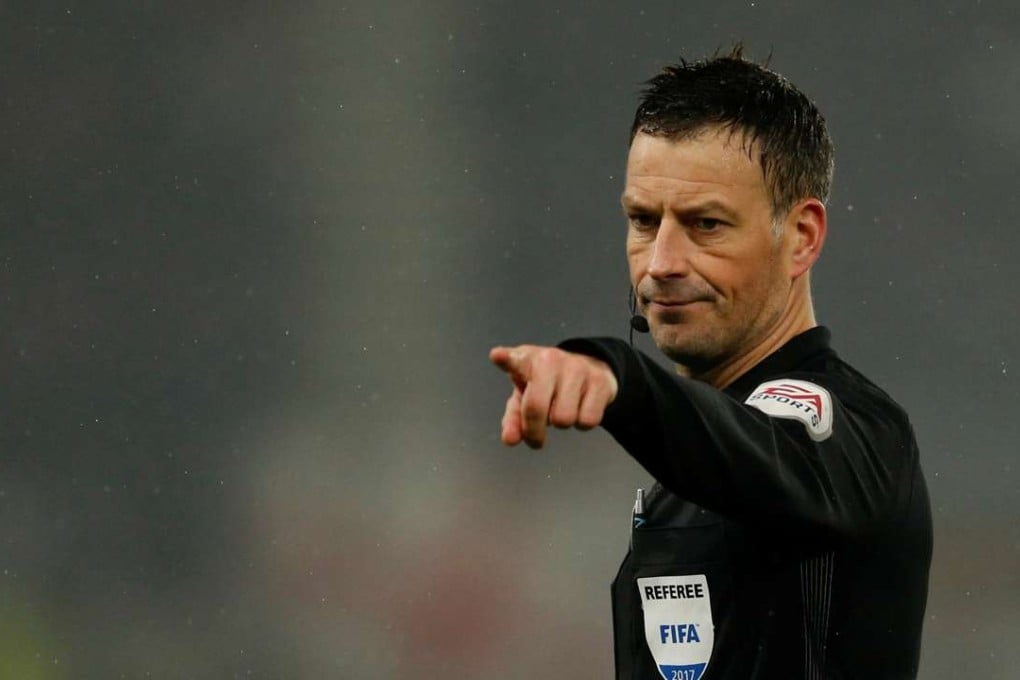
Former Premier League referee Mark Clattenburg believes football’s lawmakers, IFAB, should intervene and provide greater clarity regarding this aspect of the handball law.
He told GRV Media: “The law is clear, and if a player touches the ball with their hand before immediately scoring, then the goal must be disallowed. Olwethu Makhanya’s brilliant strike was disallowed as the ball touched his arm before he struck the ball to goal.
“I believe the decision to be correct, but I feel IFAB need to address this at the next meeting, as it’s becoming more and more a controversial law, especially what we have seen in England and Scotland in recent weeks.”
IFAB rules currently state: “A handball offence is committed when a player (except the goalkeeper in their own penalty area) deliberately touches the ball with their hand/arm, touches the ball with their hand/arm when it is in a position that makes their body unnaturally bigger and that position is not the result of their body moving fairly as part of play, scores a goal against the other team with their hand/arm or scores immediately after the ball has touched their hand/arm (even if the touch was accidental).
“A handball offence is not committed when a player heads, kicks or plays the ball with another part of their body and it then hits their own hand/arm (unless the ball goes directly into the opponents’ goal or the player scores immediately afterwards), falls and the ball hits their supporting arm, which is between their body and the ground (unless the ball goes directly into the opponents’ goal or the player scores immediately afterwards, in which case a direct free kick is awarded to the other team), is hit on the hand/arm by the ball which has been played by a team-mate (unless the ball goes directly into the opponents’ goal or the player scores immediately afterwards, in which case a direct free kick is awarded to the other team).”


 admin